Training and Capacity Development

By improving farm performance, strengthening technical skills, and building a stronger aquaculture workforce for Zambia and Southern Africa, our practical training covers the full value chain.

Aquaculture performance depends on people. Even with good genetics, feed and infrastructure, farms underperform when farmers and technicians lack practical skills in stocking, feeding, water quality, grading, biosecurity, record keeping and business management.

TCoE’s training model closes this skills gap. We combine classroom learning, pond-side demonstrations, cage-side coaching, hatchery exposure, laboratory learning and on-farm follow-up — practical, repeatable and directly useful to farmers and professionals.
Training areas

Broodstock and genetics management

Broodstock selection and conditioning, strain and monosex basics, sex reversal, family management, record-keeping, and maintaining genetic quality.

Full value-chain curriculum

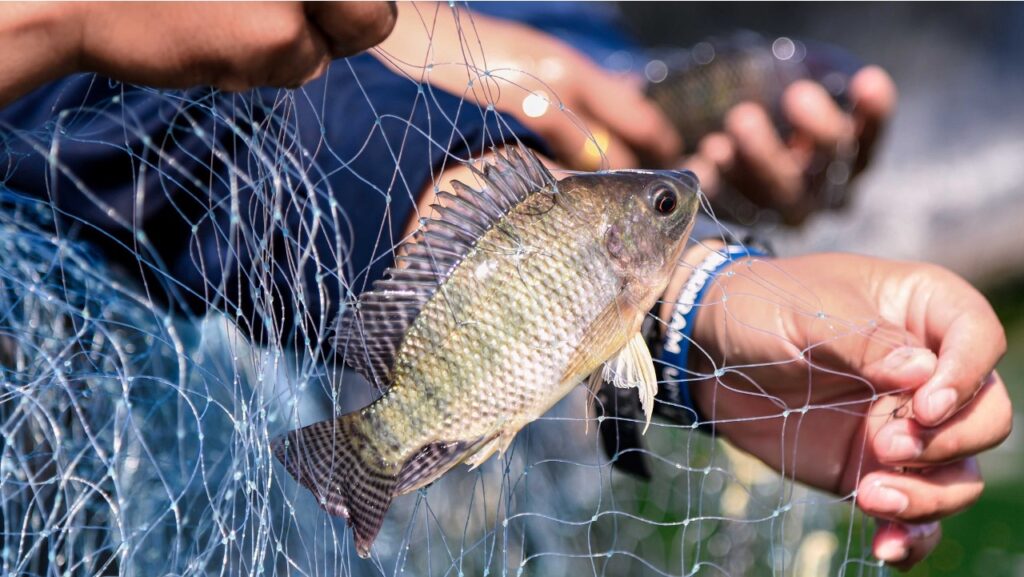
Our training follows the tilapia value chain from broodstock to market. Each stage is a standalone short course and also stacks into longer programmes, so a farmer, technician or manager can train in one link of the chain or master the whole system.

Hatchery operation

Spawning, egg collection and incubation, hatchery hygiene, first feeding, fry counting and handling, and running biosecure hatchery systems.

Juvenile and grow-out production

Stocking density, feeding regimes, growth sampling, water-quality control, grading, welfare and harvest planning to target market size.

Nursery and fingerling production

Fry-to-fingerling nursery management, weaning, size grading, conditioning, survival optimisation, packing and live transport.

Feeds, nutrition and feed management

Feed types and quality, feeding tables, feed conversion ratio (FCR), on-farm and locally sourced feed formulation, storage and cost-efficient feeding.

Fish health and biosecurity

Fry-to-fingerling nursery management, weaning, size grading, conditioning, survival optimisation, packing and live transport.

Harvest, processing and food safety

Harvesting, handling and the cold chain, gutting and filleting, value addition and smoking, hygiene, quality grading and HACCP-aligned food safety.

Sales, marketing and market access

Product positioning, pricing, buyer relationships, contracts and offtake, cooperatives and aggregation, branding and reaching institutional markets.

Fish farm economics and business

Enterprise budgeting, cash flow, cost of production per kg, break-even and margins, record keeping, financing, risk and bankable business plans.

Culture systems

Hands-on across every method

Trainees learn to select, build and manage the right system for their site, water source, budget and market.

Earthen and lined ponds

Pond design, preparation, fertilisation, liming, water management and semi-intensive production.

Cage culture

Lake Kariba-relevant cage siting, mooring, net management, stocking, feeding and monitoring.

Recirculating systems (RAS)

Filtration, biofilters, oxygenation, water treatment and biosecure intensive production and nurseries.

Biofloc systems

Floc development, carbon–nitrogen management, aeration and water-efficient intensive culture.

In-pond raceways and tanks

Raceway and tank management, water movement, waste capture and high-control production.

Integrated and aquaponics

Integrated agriculture-aquaculture and aquaponics for water reuse and diversified output.

Courses by audience

Designed for the learner

The same value-chain content is packaged into distinct courses tuned to each audience's level, time and goals.

Smallholder and emerging farmers

Short, practical, field-based courses on running a profitable small farm — pond or cage basics, feeding, health, records and selling. Stackable toward certification.

Commercial farm and hatchery teams

Technical courses for managers, supervisors, hatchery technicians and cage crews on intensive systems, SOPs, biosecurity and production performance.

Extension officers and trainer-of-trainers

Capacity building for government and development-partner staff so they can advise farmers and deliver training themselves at scale.

Students and early-career professionals

Attachments, practical modules, research exposure and structured career pathways bridging university study and industry practice.

Investors, entrepreneurs and managers

Business-focused programmes on farm economics, feasibility, system selection and investment-ready planning for those entering or scaling aquaculture.

Institutions and development programmes
Tailored curricula for schools, NGOs, cooperatives and donor projects — designed around programme goals and delivered on site or on campus.
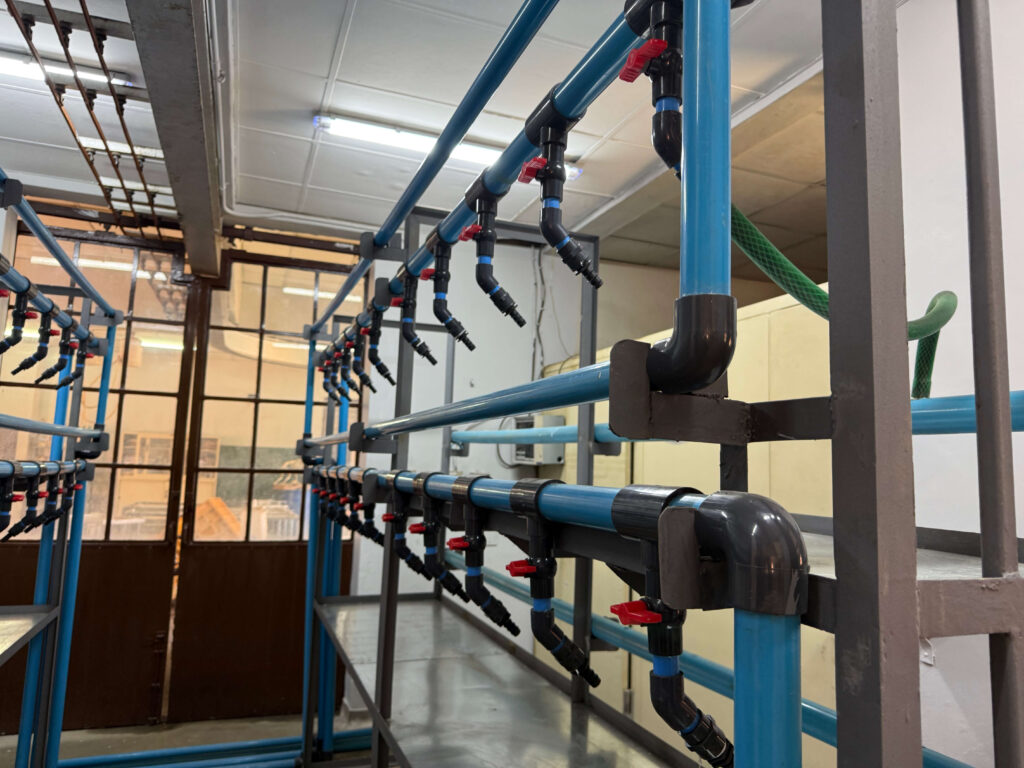
Technician checking water quality at the hatchery

Training delivery model

Training can be delivered through campus-based courses, on-farm sessions, partner institutions, farmer field schools, online support and tailored programmes for organisations.

The planned TCoE campus will include lecture rooms, practical training facilities, demonstration systems, hatchery learning areas, laboratories and accommodation to support residential and field-based training..

Who this service supports

Universities, research institutions, government agencies, commercial farms, hatcheries, feed companies, development partners, investors and students seeking practical aquaculture research with direct industry application.

Work with TCoE to design practical aquaculture training that turns knowledge into measurable farm performance.