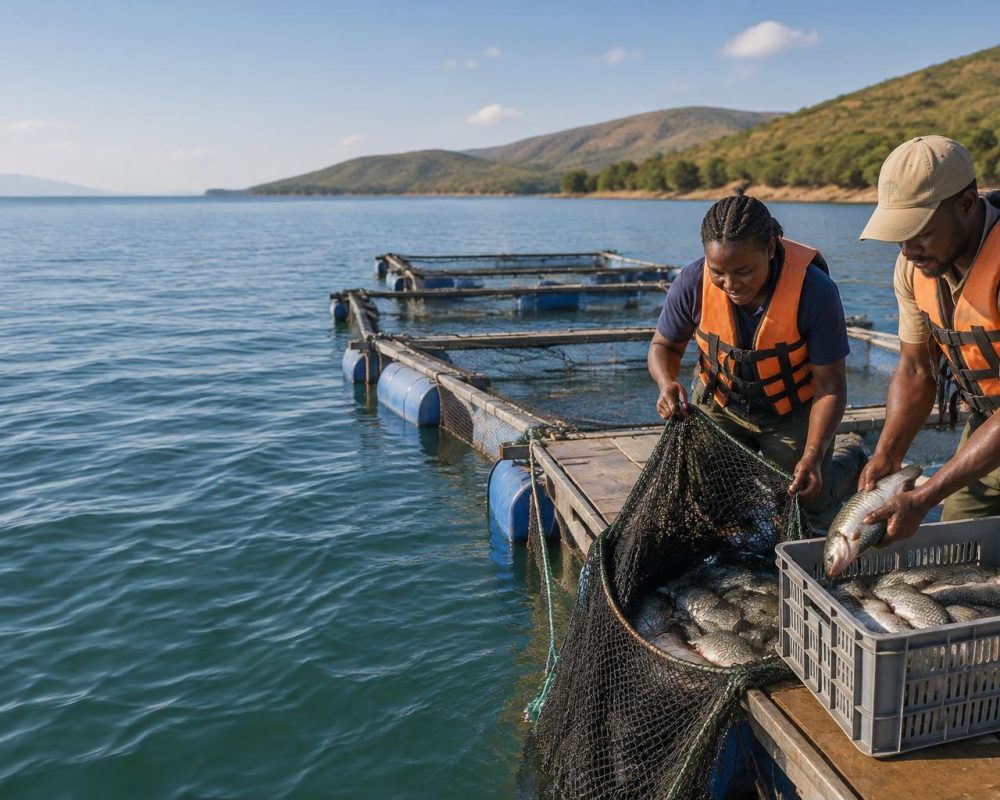
Almost all of Zambia’s cage fish grow in one lake. A disease outbreak there is a national problem. You cannot fight a pathogen you have never isolated.
Current work streams
Biobank and vaccine
Two work streams, run with the University of Zambia School of Veterinary Medicine, the Copperbelt University and the Norwegian University of Life Sciences. The first builds the collection; the second turns it into protection for the lake.
Work stream 1
Zambia's first tilapia pathogen biobank
With UNZA and national laboratories, we are building a reference collection of the pathogens that threaten Lake Kariba’s fish. Every isolate is stored, documented and available to the laboratories and researchers who need it. Main collection at the UNZA School of Veterinary Medicine; backup archives at partner laboratories.
Built to ISO 20387
The international biobanking standard.
Quality system in place0387
Quality manual, governance pack, 18 SOPs and 23 forms completed, October 2026.
Bacteria first
Viruses and parasites next.
Work stream 2
Next stop: a Zambian vaccine
The biobank feeds our vaccine programme with UNZA, CBU and the Norwegian University of Life Sciences. We follow the Norwegian salmon playbook: one pathogen at a time, fully understood, before anything is combined. Pre-work started at UNZA in September 2026.
Biosecurity
A surveillance net that reaches every cluster
Fish health starts on the farm. Our smallholder courses teach farmers to spot disease early and report it, and our Train the Trainer course equips fisheries officers to support them. That is how the biobank gets its samples and how an outbreak gets caught before it spreads.